
How to Check for an Anchorage Municipality Warrant
There is no public Anchorage warrant database, so the search is indirect. The best free tool is CourtView, where a related criminal or traffic case often hints at a warrant through a missed hearing or a bench warrant entry. After that, you confirm with the court or with defense counsel. Do not rely on private warrant sites; they are not official and can be wrong.
Here is the practical path most people follow.
- Search CourtView by name, case number, or citation for an open case.
- Look for a missed arraignment, a failure to appear, or a bench warrant entry.
- Call the Anchorage Criminal Department at (907) 264-0471 or Traffic at (907) 264-0713 to confirm.
- If you are represented, contact your attorney or appointed counsel first.
- Plan how to surrender if needed, and ask about bail, booking, and arraignment timing.
Why There Is No Public Anchorage Warrant List
Anchorage is a municipality, and Alaska runs a unified state court system, so there is no county sheriff posting a warrant roster the way some states do. CourtView shows public criminal and traffic case information, but it is not a complete active-warrant database. Search warrant records, in particular, may be sealed under court administrative bulletins until a judge orders them released.
That gap is why you see so many private "warrant lookup" sites. They are not official, they pull stale data, and they should not be trusted for an Anchorage warrant. The reliable route is the court, the prosecutor, or law enforcement.
Warrants are served by police, not posted by them. The Anchorage Police Department and the Alaska State Troopers carry out arrests on warrants, but neither publishes a public, searchable warrant roster for people to browse. A call to the court that issued the warrant is more reliable than any list you find online.
Types of Warrants in Anchorage
Warrant is a broad word. The kind of warrant tells you where it came from and how to clear it. District Court judges and magistrate judges can issue several types.
- Arrest warrant
- A court order that authorizes police to arrest a named person.
- Bench warrant
- Issued by a judge after a missed court date, a probation violation, or contempt.
- Search warrant
- Authorizes a search or seizure; the record may be sealed.
- Fugitive warrant
- Used in extradition, which a magistrate judge can handle.
- Municipal bench warrant
- Arises from a municipal misdemeanor or traffic case in Anchorage.
What an Anchorage Warrant Record Shows
When a warrant ties to a public case, a few details may surface in CourtView or through the court. A standalone warrant record is not always public, especially a sealed search warrant. The table lists the fields you might see when a warrant connects to an open case.
| Field | What It Shows |
|---|---|
| Warrant Type | Arrest, bench, search, or fugitive. |
| Issuing Court | The District Court or a magistrate judge. |
| Related Case | The 3AN case number the warrant attaches to. |
| Subject | The named person, when the record is public. |
| Basis | Missed appearance, probable cause, or probation issue. |
| Status | Whether the matter is active or resolved. |
Because some of this stays sealed, the absence of a warrant entry online does not prove there is no warrant. The only way to be sure is to ask the court or law enforcement directly, with a name and any case number in hand.
Searching CourtView for Warrant Clues
Since there is no warrant portal, CourtView is the workaround. You search a case the same way you would for any record, then read the docket for warrant-related entries. The fields below are the ones that help most.
| Field Label | Type | Required | Notes / Format |
|---|---|---|---|
| Case Number | Text | Yes on case tab | Full string, such as 3AN-12-00001CR. |
| Name | Text | No | Search a person by last and first name; try variants. |
| Ticket Number | Text | No | For a traffic case that may carry a bench warrant. |
| Case Type | Multi-select | No | Filter to Criminal or Traffic to narrow results. |
The court records page covers the full set of CourtView fields if you need more search depth.
Bench Warrants and Missed Court
Bench warrants are the most common warrant a regular person runs into. They often come from a missed court date. The Anchorage Municipal Prosecutor gives a clear warning on this point: for charges like driving under the influence, driving while license suspended, and driving without insurance, a driver may still face criminal charges even if a vehicle is released, and missing the arraignment can lead to a bench warrant.
If you think a missed date created a warrant, do not wait. Contact the court department handling the case, or your attorney, to get back on the calendar before police act on the warrant. Acting fast can also help you avoid serving any suspended time tied to the original case. The arrest records page explains how charges and dispositions read in CourtView.
Search Warrants and Sealed Records
Search warrants work differently from arrest and bench warrants. A judge issues a search warrant on a showing of probable cause, and it lets police search a place or seize property. The record is sensitive. Under the court's administrative bulletins, a search warrant affidavit and its return can stay sealed until a judge orders them public or a set procedure runs its course.
That means you usually cannot pull a search warrant from CourtView the way you might read an open criminal docket. If a search warrant matters to a case you follow, the file at the courthouse, not the online index, is where any unsealed version would appear. The court records page explains the sealed-record rules in more depth.
Getting Legal Help With an Anchorage Warrant
A warrant is one of the moments where a lawyer helps most. People charged in Anchorage who cannot afford counsel may qualify for appointed defense. The Alaska Public Defender Agency runs an Anchorage office and takes many criminal cases. When a conflict rules out the Public Defender Agency, the Office of Public Advocacy steps in. The municipality also contracts with the Public Defender Agency to cover indigent municipal defendants.
A defense lawyer can ask the court to quash a bench warrant, set a new hearing, or arrange a surrender on agreed terms. That is far better than being picked up at home or work without warning.
What to Do If You Have an Outstanding Warrant
An outstanding warrant does not clear itself. Handling it early gives you more control over how and when you appear. The steps below are the safe order.
- Confirm the warrant through CourtView and a call to the court, not a private site.
- Talk to a lawyer; if you cannot afford one, ask about the Public Defender Agency.
- Ask the court or counsel about quashing the warrant or setting a new hearing.
- If a surrender is needed, ask about bail, booking, and arraignment timing in advance.
Surrendering on your own terms is usually smoother than a surprise arrest. If a surrender is the plan, the Anchorage Correctional Complex handles booking, and a court-approved third party may need to be present for any later release. Ask counsel or the court how bail will be set so the timing does not catch you off guard.
Note: Confirm any warrant directly with the Anchorage court or law enforcement, since private warrant websites are not official and are often outdated.
Requesting Anchorage Police and Municipal Records
Some warrant-related paperwork sits with the municipality rather than the court. Anchorage takes municipal public records requests through an online JustFOIA portal, which issues a request number and a security key to track status.
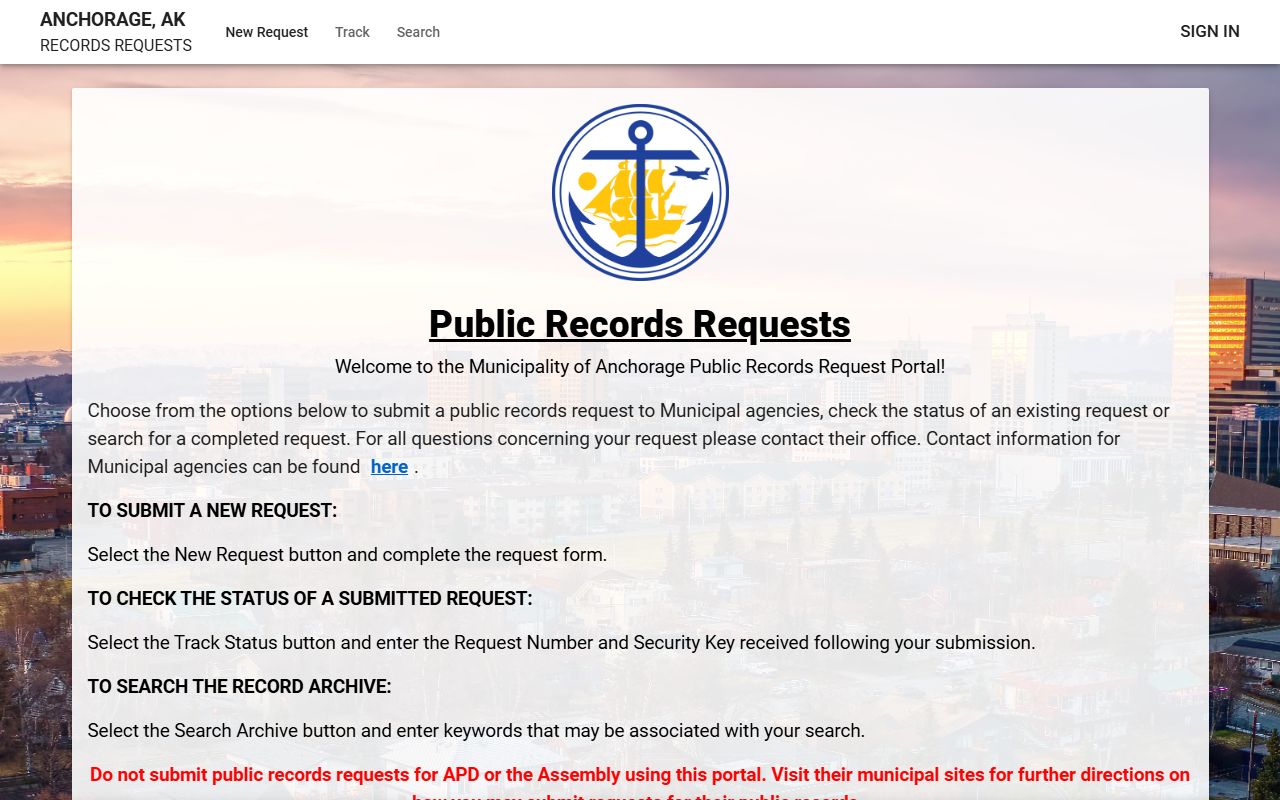
You can open the Anchorage JustFOIA portal to start a municipal records request. For court file copies instead, the public records page explains which custodian to use.
Related Public Safety Lookups
People checking on warrants often also want to check the Alaska Sex Offender and Child Kidnapper Registry, run by the Department of Public Safety. It is a separate public tool, not a warrant list, but it is a free official safety lookup for the state.
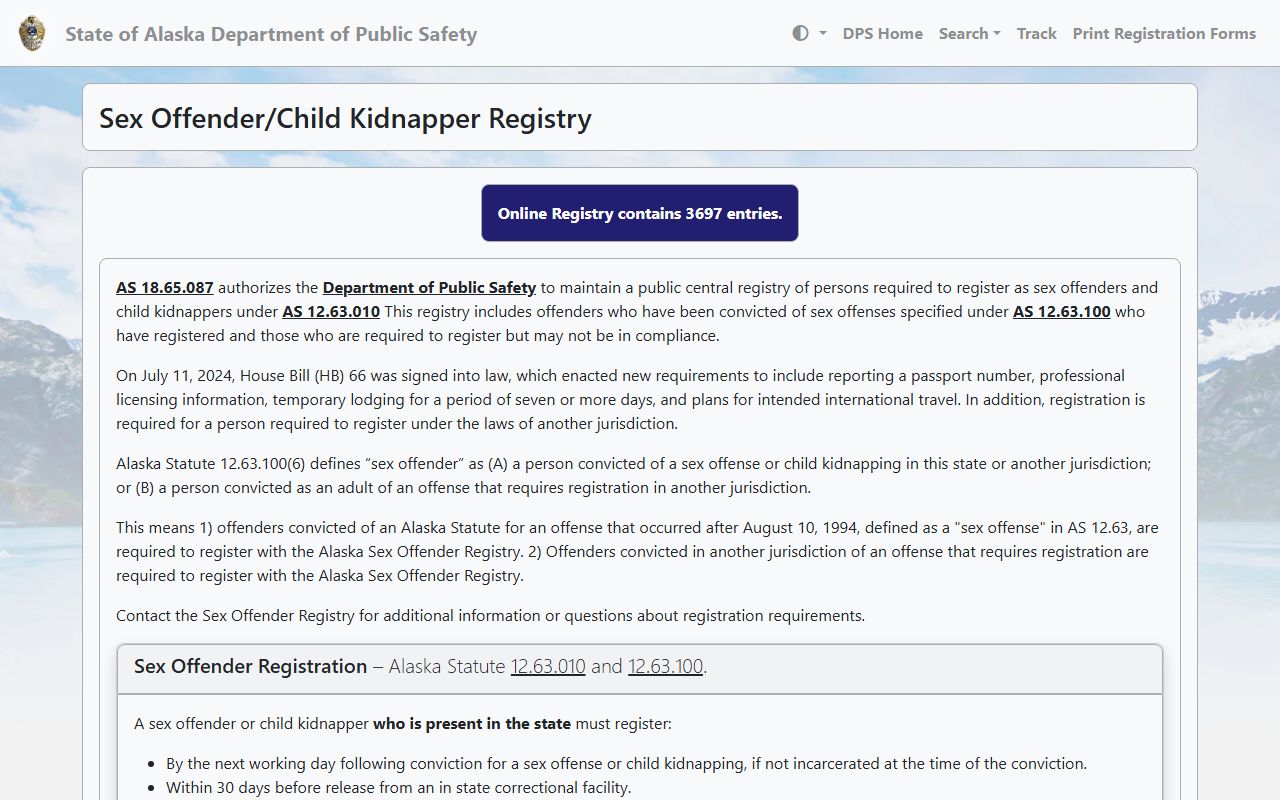
The Alaska sex offender registry lets you search by name or zip code and flag non-compliant entries. The released inmates page covers it alongside custody notification tools.