
How to Search Anchorage Probate Records
Probate in Anchorage runs through the Superior Court, and the public search runs through CourtView. You search a decedent, a testator, or a trust by name, the same way you would any case. The case type and the suffix tell you it is a probate matter. Estate cases, will registrations, and trust registrations each show up under their own filters.
So the search is not different in mechanics, only in vocabulary. Once you know the probate case types and suffixes, the results are easy to spot. Anchorage estate files begin with the 3AN prefix, just like other local cases.
- Open CourtView and choose the Name tab.
- Enter the decedent, testator, or trust name; try spelling variants.
- Filter the case type to Estate, Will Registration, or Trust Registration.
- Open the matching case to read the docket and parties.
- Request copies with form TF-311 ANCH if you need the documents.
Probate in the Anchorage Superior Court
The Superior Court holds general jurisdiction in Alaska, and probate is part of that. It handles the property of people who have died, guardianships, conservatorships, and related matters. Anchorage has a dedicated probate contact line for filings and records questions. The contact card below has the details.
Anchorage Probate, Superior Court
Anchorage Trial Courts
825 W. 4th Avenue
Anchorage, AK 99501
(907) 264-0433
For the court structure behind this, the Superior Court page covers jurisdiction in more depth.
Superior Court probate reaches further than wills and estates. It also covers the property of people who cannot manage their own affairs, along with trusts and minor settlements. That breadth is why probate, guardianship, and conservatorship all share the same court even though the public can see some and not others. The line between public and confidential runs through the middle of this one court.
Wills and Deposit of a Will
A valid Alaska will generally must be written, made by a person 18 or older who is of sound mind, signed by the person making it, and signed by two witnesses. A holographic will can be valid without two witnesses in some cases, and a self-proving will adds sworn statements that avoid extra testimony unless the will is contested.
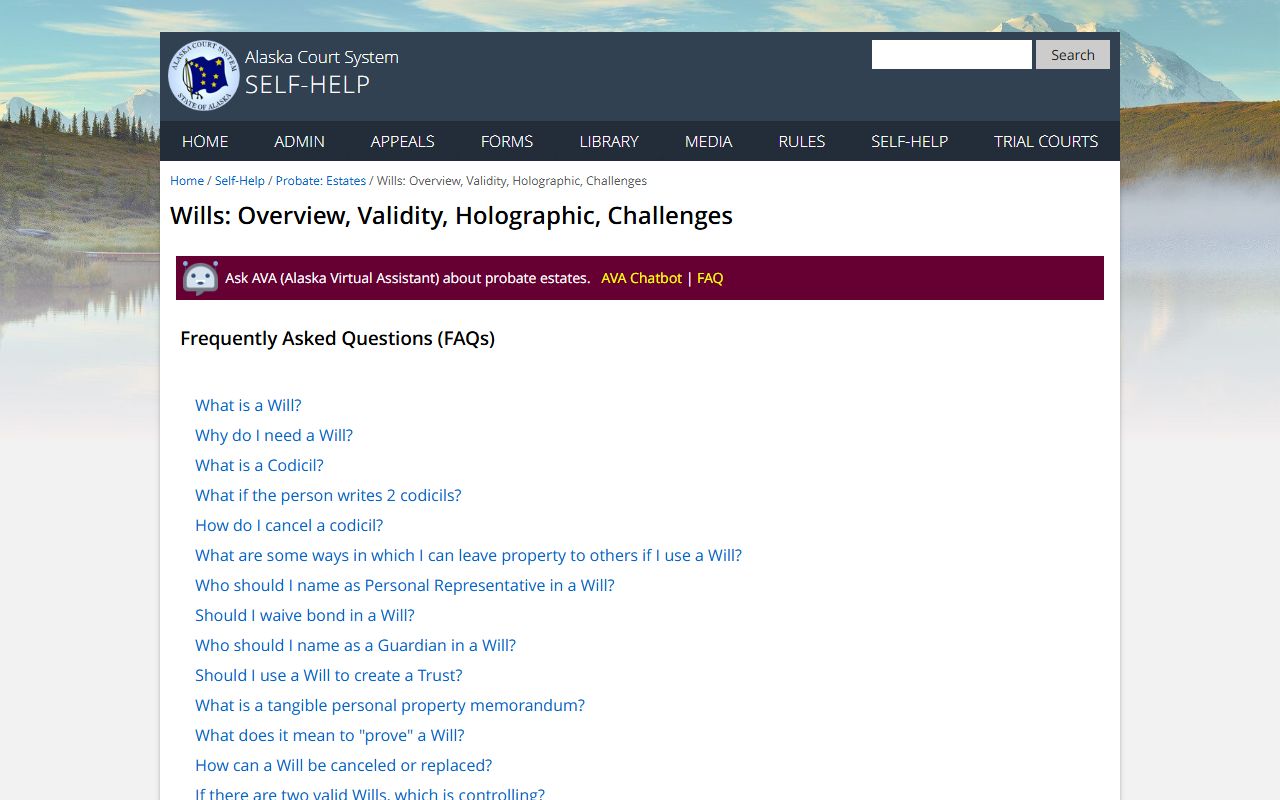
The Alaska wills and probate page explains the rules. A living person can also deposit a will with the court for safekeeping using form P-100. The court assigns a case number ending in WI. While the person is alive, the will stays confidential, and CourtView shows only the name and case number.
That confidentiality is the point of a deposit. The court holds the original safely, yet no one but the maker, or someone with written permission, can read it until the maker dies. After death, the deposited will becomes part of the probate process. So a WI entry in CourtView is a marker that a will exists, not an open document you can pull.
Searching Probate Cases in CourtView
CourtView is the same portal used for every Alaska trial court case, hosted by the court system. For probate, the useful part is the case-type and party-type filters. They let you narrow a long results list to estates, wills, or trusts, and to the right role.
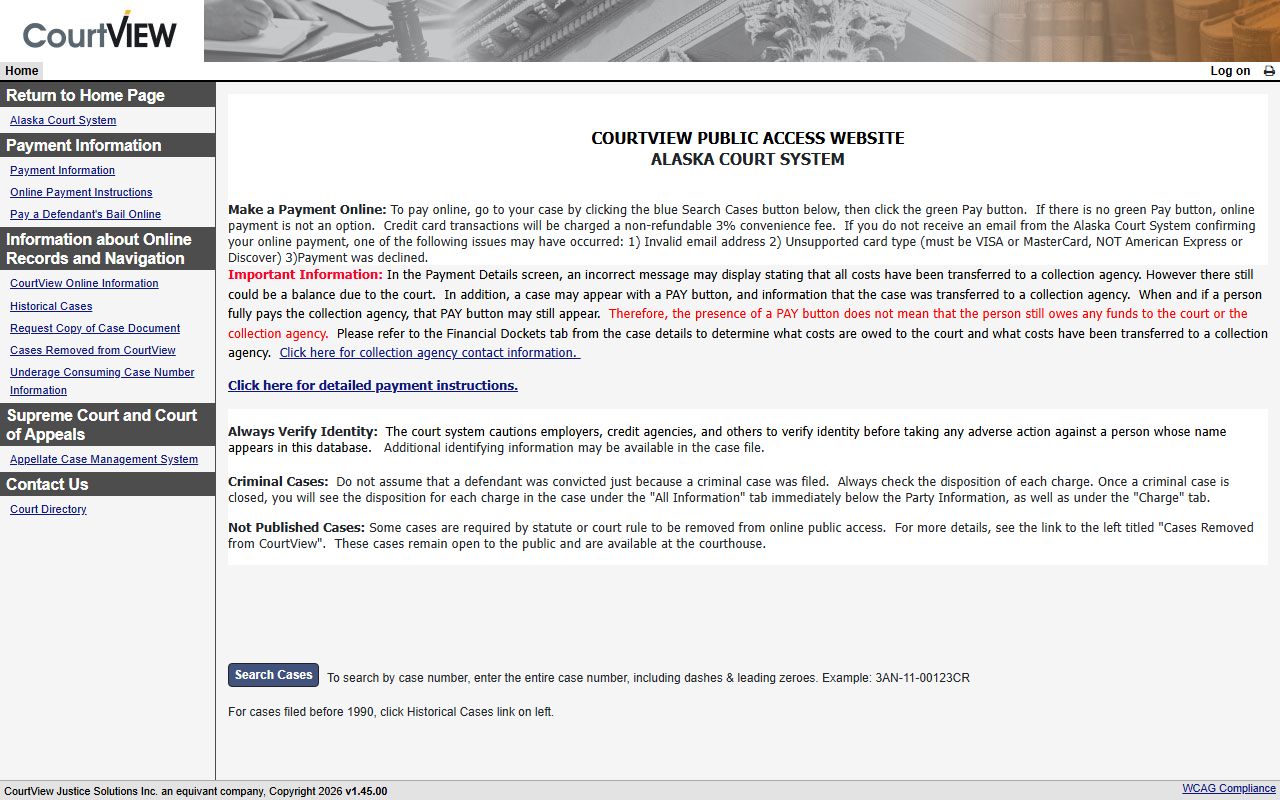
The CourtView records site hosts the public search. Helpful filters for probate include these.
- Case types - Estate, Will Registration, Trust Registration, Trust or Will Actions.
- Party types - Decedent, Personal Representative, Testator, Trustee, Trustor.
- Suffix - PR for probate, WI for a deposited will.
A will registration ends in WI, such as a number in the form 3AN with the WI suffix. That suffix is a quick signal you found a will record rather than a contested estate.
Guardianship and Conservatorship
Not all probate is public. Guardianship and conservatorship are handled by the Superior Court, often through its probate and children's divisions, but the records request form lists both as confidential case types. A guardian manages a person, while a conservator manages money or property. The process page walks through how an Anchorage conservatorship is set up.
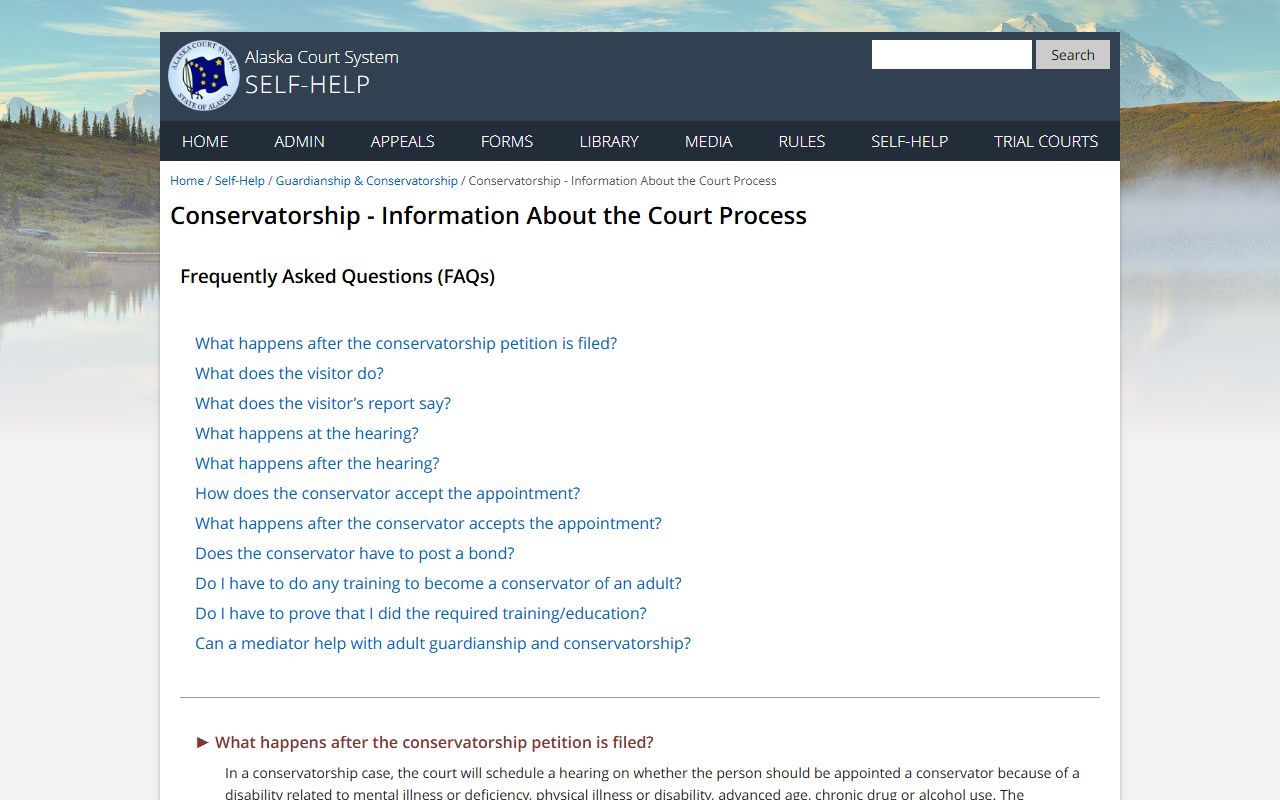
The conservatorship process page covers the steps. Because these files are confidential, only parties can get copies, and they must show photo identification to a clerk.
The distinction matters when you search. A guardianship or conservatorship may still leave a faint trace in CourtView, but the documents are closed to the public. That protects a vulnerable adult or child whose finances and care are at issue. If you are a party and need a copy, plan to appear in person with identification rather than expecting an online download.
Anchorage Probate Filing Fees
Probate carries its own filing fees, set statewide. The estate filing fee is the main one. Guardianship and a will deposit cost less. The table lists the common amounts.
| Item | Amount |
|---|---|
| Probate of estates filing | $250 |
| Guardianship filing | $150 |
| Deposit of a will | $50 |
| Plain copy, first document | $5 |
| Certified copy, first document | $10 |
Copy fees follow the same schedule as other court records. The court can waive filing fees for those who qualify.
What an Anchorage Probate Record Shows
A probate file builds up as an estate is settled. The public index entry shows the basics, while the documents inside hold the detail. The table lists the main fields you may see on an estate or will case.
| Field | What It Shows |
|---|---|
| Case Number | The 3AN number with a PR or WI suffix. |
| Parties | Decedent, personal representative, heirs, and trustees. |
| Case Type | Estate, will registration, trust registration, or trust action. |
| Docket | Filings such as the petition, inventory, and accounting. |
| Orders | Appointment of a personal representative and distribution orders. |
For a deposited will, the index shows little while the maker is alive. The detail opens up only after death or by the maker's written permission.
Anchorage Probate Terms Defined
Probate uses a vocabulary all its own. A few terms come up in nearly every estate file, and knowing them makes a record far easier to read.
- Testator
- The person who makes a will.
- Personal representative
- The person the court names to settle an estate, sometimes called an executor.
- Intestate
- Dying without a valid will, so state law decides who inherits.
- Guardianship
- A court order giving someone authority over another person's care.
- Conservatorship
- A court order giving someone authority over another person's money or property.
How an Anchorage Probate Case Works
A probate case follows a fairly set path, whether or not there is a will. The basic flow helps you understand what a docket is showing.
- Determine whether the person left a will and whether it was deposited with the court.
- Search CourtView by name; will registrations carry the WI suffix.
- File a probate or estate case in the Superior Court if one is needed.
- Request appointment as personal representative if you are eligible.
- Handle notices, inventory, accounting, and distribution as Alaska law requires.
Formal probate is used for contested issues, lost or unclear wills, disputes among heirs, or challenges to a will's validity. Simpler estates can often move through an informal process, which is faster and lighter on court hearings. The size of the estate, the clarity of the will, and whether anyone objects all shape which path a case takes.
Other Probate Research Tools
CourtView is the official source, but a free research tool can help with opinions and some docket data. CourtListener compiles court opinions and dockets and can support background research, though official filings should still be confirmed through the court.
You can use CourtListener for free opinion research and appellate context. For the actual Anchorage probate file, the court and CourtView remain the authoritative sources, and a private aggregator should never stand in for them.