
How to Find Anchorage Public Records
The first move in any Anchorage public records search is to name the custodian. Different bodies hold different records, and sending a request to the wrong one wastes everyone's time. Court files go to the Alaska Court System. City records go to the Municipality of Anchorage. Criminal history goes to the Department of Public Safety, and custody data goes to the Department of Corrections.
Once you know who holds the record, the request method follows. The sections below cover the open-records law, the court-rule exception, and the municipal request process step by step. This routing question is the part people skip, and it is the part that causes the most delay. A request aimed at the right custodian, with a clear description, usually moves far faster than a broad one sent to the wrong office.
The Alaska Public Records Act
The Alaska Public Records Act is the backbone of public access in the state. It runs through Alaska Statutes 40.25.100 to 40.25.295. The core rule is simple: public records of public agencies are open to inspection during regular office hours, unless a law says otherwise. Fees generally cannot exceed the cost of duplication, though personnel costs can be charged when one requester's production runs past five staff hours in a month.
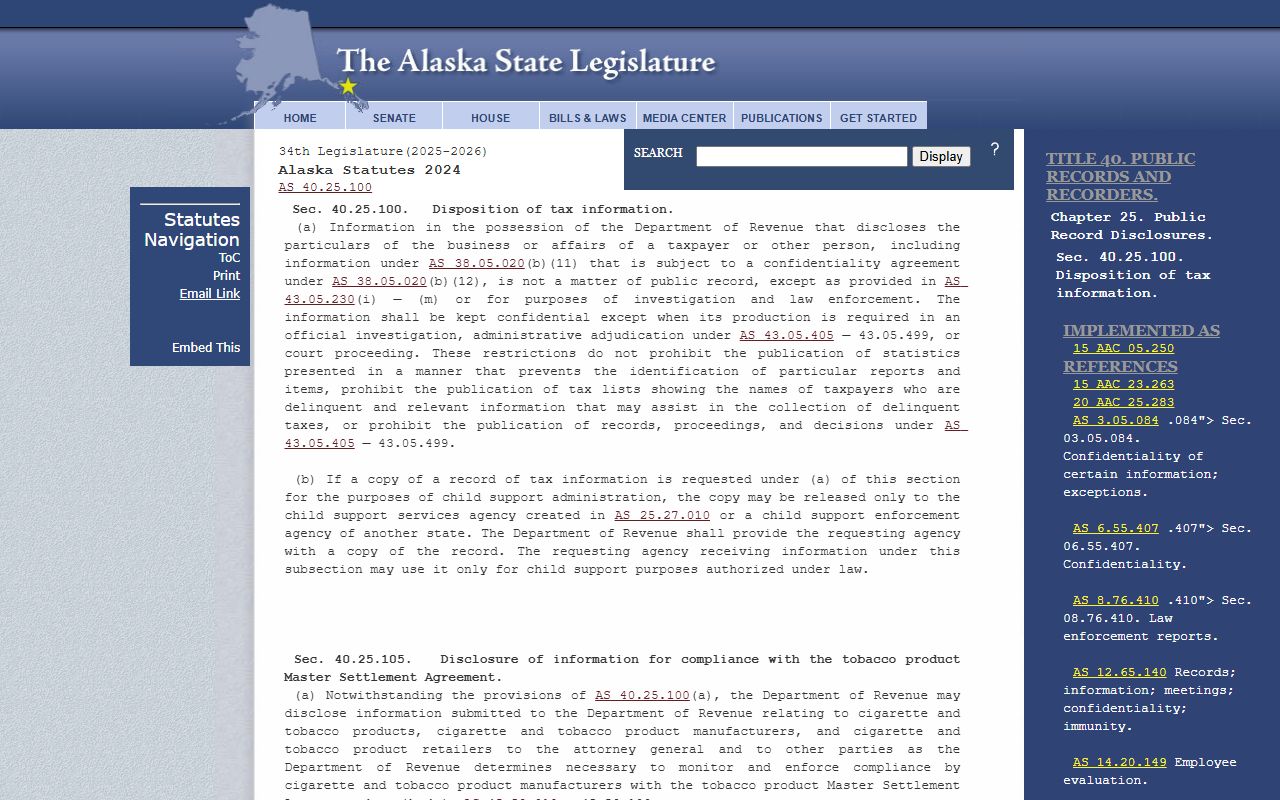
You can read the chapter through the Alaska public records statutes index. Two sections matter most: AS 40.25.110 opens records to inspection and copying, and AS 40.25.120 lists the exceptions and covers certified copies.
A related principle, sometimes cited as AS 40.25.122, preserves public access unless a record is sealed by court order. The act applies to public agencies, which is a broad category covering state and many local bodies. The upshot is a strong presumption of openness, with the burden on the agency to point to a specific exception when it withholds something.
Court Records Follow Court Rules
Here is the catch that surprises many requesters. Court records in Alaska are not handled under the general open-records law alone. They follow the Alaska Court System Administrative Rules, mainly Rules 37.5 through 37.8 and Rule 40. That means a public-records request to a city office will not produce a court file. The Department of Law publishes a plain-English guide to the act and how it works.
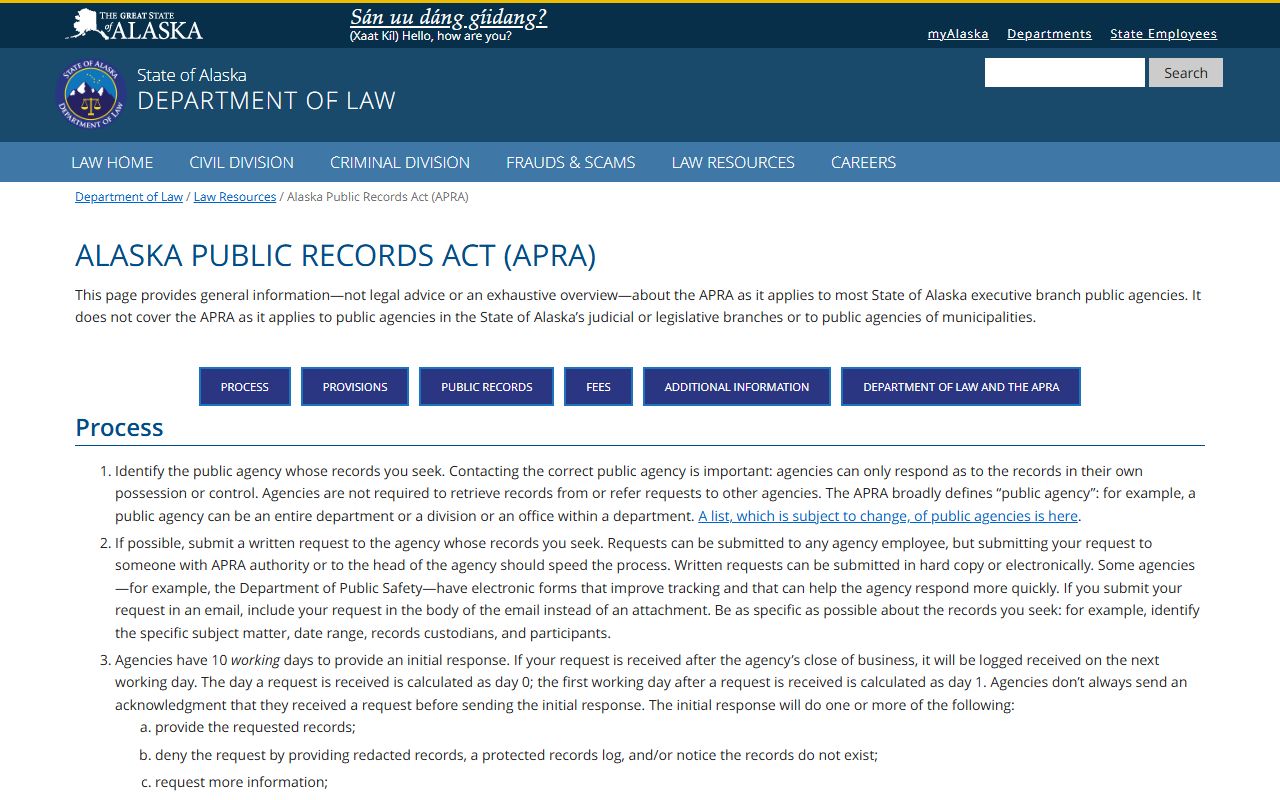
The Alaska Public Records Act guide explains the framework and gives a Department of Law request contact. For a court file, you use the court records process and form TF-311 ANCH instead.
This split also explains a common point of confusion. A court record can be public at the courthouse yet absent from CourtView, because CourtView is an index, not the full file. The general open-records law does not change that. So if you are after a court document, the court rules and the records desk are the path, not a city public-records request.
Anchorage Municipal Code and Open Records
The city has its own open-records policy on top of the state act. The Anchorage Municipal Code, Chapter 3.90, sets a goal of the fullest and most rapid public access to municipal records, read liberally in favor of disclosure except where an exemption applies. That policy is why the municipality maintains a public portal and a published FAQ.
The municipal rules also standardize charges. Municipal records work can be billed at actual cost, with an hourly rate that does not exceed $40, plus the cost of materials and reproduction. So a large or research-heavy municipal request can carry a real bill, which is why the fee estimate up front is useful.
Requesting Anchorage Municipal Records
City records are a separate track from court records. The Municipality of Anchorage runs an online public records portal called JustFOIA, which issues a request number and a six-digit security key so you can track status. You can also request by mail, email, phone, or in person, but the municipality asks that you not duplicate the same request across several channels.
The Anchorage records management page explains the process and the FAQ. The steps below cover a municipal request from start to finish.
- Open the municipal portal at the Anchorage JustFOIA page.
- Describe the records you want and a date range, as clearly as you can.
- Provide your contact details for the response and any fee estimate.
- Submit, and save the request number and six-digit security key.
- Watch for an acknowledgment, a time estimate, and a fee estimate.
Municipal Records Fees and Timing
The municipality should acknowledge a request quickly. Its FAQ says you can expect an acknowledgment, an estimated production time, and a fee estimate within two working days. If records cannot be located in time, the requester is told, and a reasonable, diligent search follows if you still want them. Fees can include staff time.
| Item | Amount |
|---|---|
| Acknowledgment, time and fee estimate | Within 2 working days |
| Staff time for municipal records work | Actual cost, hourly rate up to $40 |
| Materials and reproduction | Actual cost |
Court records use a different fee schedule, with set copy and certification fees rather than an hourly rate, which the Clerk of Court page covers in full.
What an Anchorage Records Request Needs
A clear request gets a faster answer. Whether you use the portal or another channel, the same core information helps the office find and deliver what you want. The table lists what to include.
| Element | What to Provide |
|---|---|
| Requester name | Your name and any agency, if you represent one. |
| Contact details | Email, phone, or mailing address for the response. |
| Records description | A clear description of the records you want. |
| Date range | The time period the records cover. |
| Delivery method | How you want to receive the records. |
| Tracking key | The request number and security key returned to you. |
Records fulfilled before a 2024 cutoff may not appear in the public archive, so a request is the surest route for older municipal items. A narrow, specific description also lowers the chance of a large staff-time fee, since the office spends less time searching.
Records Held Beyond the Courts
Plenty of useful public records are not court files at all. The municipality and state agencies hold a wide range. Knowing where each one lives saves a lot of guessing.
- Municipal records - city contracts, permits, and department files through JustFOIA.
- Criminal history - official rap sheets from the Department of Public Safety.
- Custody data - inmate status through the Department of Corrections and VINE.
- Vital records - birth, death, and marriage from Health Analytics and Vital Records.
- Court files - case records through the Alaska Court System and CourtView.
For custody, the inmate records page covers the lookup, and for criminal history, the arrest records page covers the Department of Public Safety process.
Confidential Exemptions and Custodian Routing
Not everything is open. The Public Records Act lists exceptions, such as adoption and vital-statistics confidentiality, juvenile records, some medical and public-health records, and certain law-enforcement records. Court rules add their own restrictions for sealed and confidential cases. Criminal justice information is regulated separately under state law.
Note: Route each request to the agency that actually holds the record, because the wrong custodian cannot release a file it does not keep.
When a record is exempt, the office should say so and cite the basis. If you disagree, the Department of Law guide and the municipal process explain how to follow up. Common exemptions include adoption and vital-statistics confidentiality, juvenile records unless disclosure is authorized, certain medical and public-health records, records made confidential by other state or federal law, and some active law-enforcement records. An exemption usually covers part of a file, so a record can come back with portions redacted rather than withheld in full.