
How to Find Anchorage Marriage and Divorce Records
The split between court and vital records is the whole game here. A divorce or dissolution is a court case, so you find it in CourtView and request the decree from the court. A marriage license and the marriage certificate are vital records, held by the state, not the court. Treating them as one search leads people in circles.
So a clean search starts by naming what you actually need. For a divorce decree, you work the court. For a marriage license or certificate, you work Vital Records. The sections below cover each path.
One more rule keeps the court search on track. Anchorage holds case files that begin with 3AN, and also 3SP and 3ST. If a divorce case number starts with a different code, the file lives at another court, and that court is the one to ask. CourtView is the free way to confirm the number before you send any request.
Anchorage Does Not Issue Marriage Licenses
This is the surprise that trips up many couples. The Alaska Court System marriage FAQ states plainly that the Anchorage and Juneau courts do not issue marriage licenses. Most other Alaska courts do, but Anchorage is a specific exception. Couples in Anchorage must get the license from the local Health Analytics and Vital Records office instead.
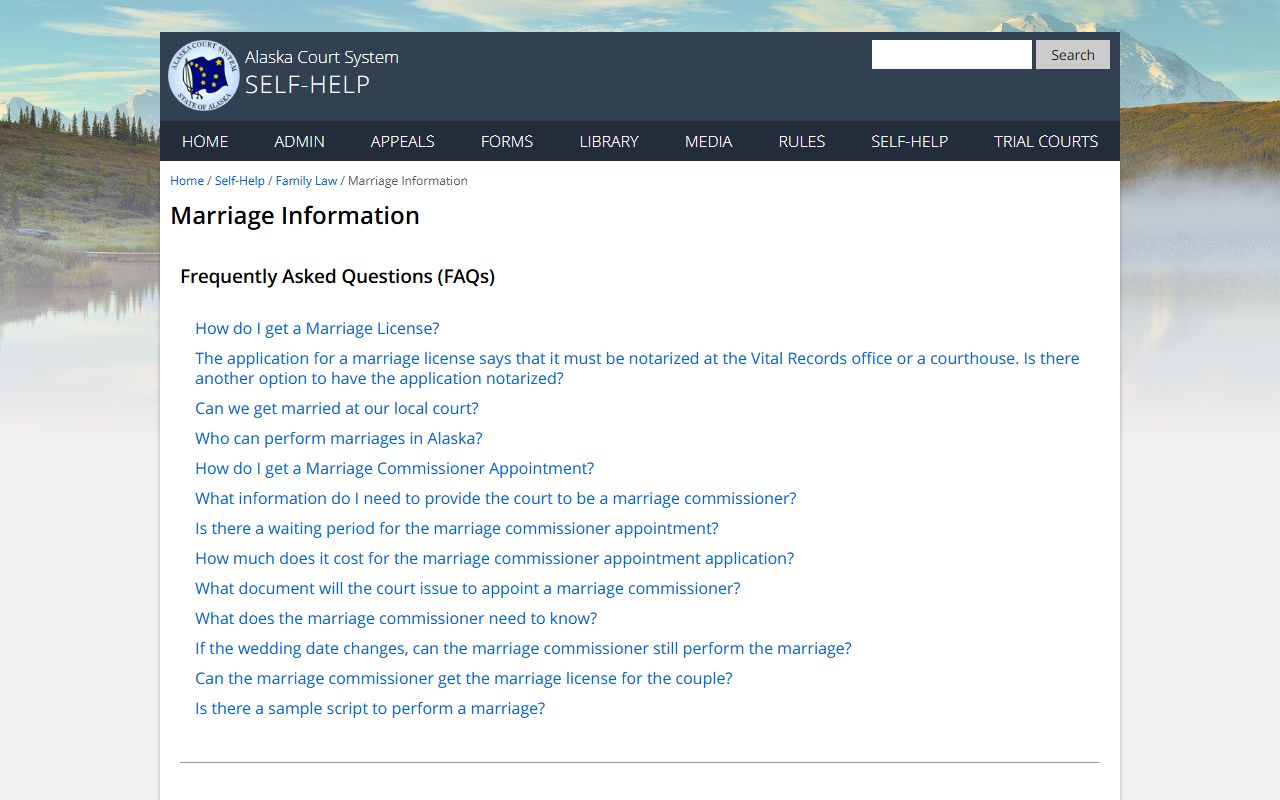
The Alaska marriage FAQ points couples to Vital Records for the application and instructions. The application can be notarized by Vital Records, a courthouse, a public notary, or a postmaster.
This matters for records, not just for getting married. Because the license and certificate are vital records, a later request for a marriage certificate goes to the state, not to the Anchorage court. So if you are tracing whether a marriage happened, the court file will not hold the certificate. The state vital records office is the custodian for that document.
Who Can Perform an Anchorage Marriage
Alaska is flexible about who solemnizes a marriage. A religious leader, a marriage commissioner, a judicial officer, or an elected public official can do it. There is also a friend-or-relative path. Under state law, a friend or family member can perform the ceremony if an Alaska court first appoints them as a marriage commissioner. The intended commissioner should be 18 or older and need not live in Alaska.
The court needs specific information to issue that appointment. The table lists what an application for a marriage commissioner must include.
| Field | Notes |
|---|---|
| Commissioner full name | Include the middle name. |
| Commissioner address | Mailing address of the person appointed. |
| Couple full names | Both names, including middle names. |
| Marriage date | Month, day, and year. |
| Ceremony location | Town or physical place of the ceremony. |
| Processing fee | $25. |
The court issues a written order appointing the commissioner. That person must hold the order before the ceremony and is responsible for filing the certificate with Vital Records afterward.
Filing for Divorce or Dissolution in Anchorage
Divorce and dissolution are the court side. A dissolution is the agreed path when both spouses sign on, while a divorce covers contested cases. Either way, the case is filed with the Alaska Court System, and a decree of dissolution carries the same force as a decree of divorce. The court's self-help pages walk through residency, forms, costs, and waiting periods.
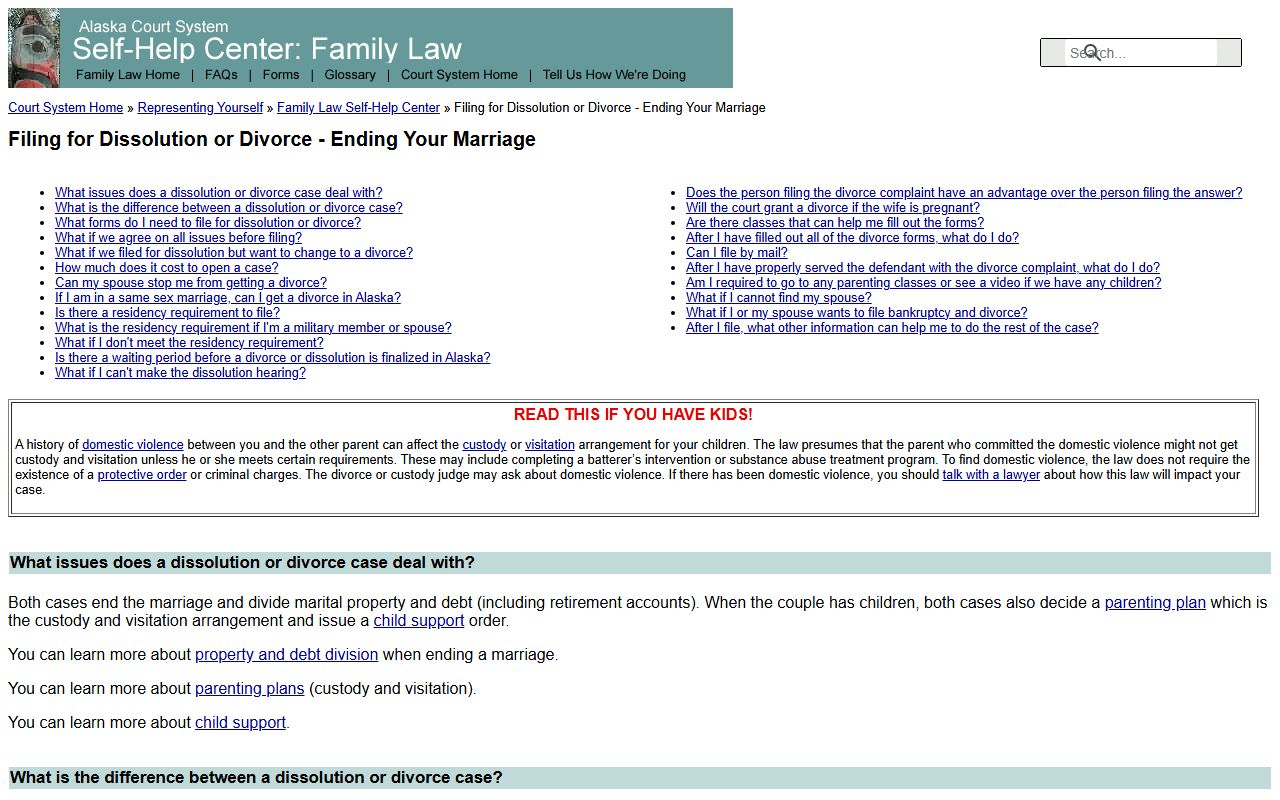
You can open the Alaska divorce and dissolution guide to start. The filing fee for divorce, dissolution, custody, or paternity is $250. Once a case is filed, it gets a 3AN case number and shows in CourtView as a domestic relations matter.
The guide also covers the parts people most want to know up front. Alaska sets residency rules for filing, a waiting period before a case can finish, and the forms each path needs. A dissolution moves faster because both spouses agree on the terms. A divorce can take longer when property, custody, or support are in dispute. Either way, the final order is the decree, and that is the document most people later ask the court to copy.
What an Anchorage Divorce Record Includes
A divorce file is more than the decree. It can hold several documents, and a records request lets you pick which ones you need. The court's package options group the common ones together.
- Decree of dissolution or divorce, the final order.
- Findings of fact and conclusions of law.
- Any qualified domestic relations order, or QDRO, dividing retirement.
- Judgments, motions, and orders filed in the case.
- The Domestic Relations Package, which bundles the decree and current final orders.
On the request form, you check the documents you want. The Domestic Relations Package is the simplest choice when you want the full set of final orders rather than one filing.
How to Request an Anchorage Divorce Decree
Getting a copy of a decree follows the standard records process. You confirm the case number first, then request the document from the Anchorage court with form TF-311 ANCH. The steps below are the order to follow.
- Search CourtView for the case number if you do not have it.
- Confirm the case prefix is 3AN, 3SP, or 3ST for an Anchorage file.
- Complete TF-311 ANCH with the case name, number, and documents requested.
- Select Decree of Dissolution or Divorce, or the Domestic Relations Package.
- Choose delivery by email, U.S. Mail, or fax, and pick plain or certified copies.
- Submit by email or fax to the correct Anchorage or out-of-Anchorage address.
Normal processing runs about 5 to 7 business days, and a missing case number can add an hourly research fee, which is why the CourtView lookup comes first. The Clerk of Court page covers the records request and the confidential-records rules in more detail.
Marriage and Divorce Record Fees
A few set fees apply across the court side of these records. The filing fee is the big one; copies are smaller. The table lists the common amounts.
| Item | Amount |
|---|---|
| Divorce, dissolution, custody, or paternity filing | $250 |
| Marriage commissioner appointment | $25 |
| Plain copy, first document | $5 |
| Certified copy, first document | $10 |
| Protective order filing | Free |
Marriage license fees are set by Vital Records, not the court, so confirm those with the state office. The court can waive filing fees for people who cannot pay, using a separate exemption form. Certified copies must be mailed, while a plain copy can often be sent by email.
Confidential Family Matters
Family cases carry more privacy limits than most. While a divorce index entry may be public, documents can hold restricted personal details. Adoption is fully confidential. Child in need of aid cases are confidential. Some custody and support documents are redacted to protect personal information. So you may find a case listed in CourtView yet still be unable to pull every document tied to it, especially where children are involved. Confirm what is releasable with the court before you count on a particular document.
Note: Only parties to a confidential family case can get copies, and they must show photo identification to a court clerk.
Legal Help for Anchorage Family Cases
Family law is one area where free or low-cost help is widely available in Anchorage. The Alaska Court System Family Law Self-Help Center assists people filing without a lawyer. Several nonprofits add civil legal aid for those who qualify.
The Alaska Legal Services Corporation offers civil legal aid statewide, with an Anchorage office. Another option focuses on language access and immigration-related civil help.
The Alaska Institute for Justice provides language and civil legal services. For criminal matters, which are a different track, the Public Defender Agency handles appointed defense.
You can reach the Alaska Public Defender Agency through its contact page. For most family filings, though, the Self-Help Center and civil legal aid are the better fit.