
How to Find Anchorage Federal Court Records
Federal records do not live in CourtView, so a federal search starts somewhere else. The official system is PACER, which indexes district, bankruptcy, and appellate courts nationwide and requires an account. A free alternative for opinions and some docket data is CourtListener, though official filings should still be confirmed through PACER or the clerk.
So the rule is simple: state cases use CourtView, federal cases use PACER. If you cannot find a case in the state portal and it sounds federal, switch systems rather than assuming the case does not exist. The two systems do not talk to each other, so a search in one will never surface a case from the other.
How do you know a case is federal in the first place? Federal cases involve federal law, federal agencies, or parties in different states, along with bankruptcy and certain civil rights claims. A drug case, a fraud against a federal program, or a bankruptcy filing are common examples. When in doubt, a quick PACER check settles it, since the state and federal systems do not share records.
The U.S. District Court for the District of Alaska
Alaska has a single federal trial district, and Anchorage hosts its main courthouse. Federal cases there include federal criminal prosecutions, civil rights suits, federal-question civil cases, diversity cases, agency litigation, and habeas matters. The court's Anchorage page is the place to confirm current entrance, hours, and courthouse details.
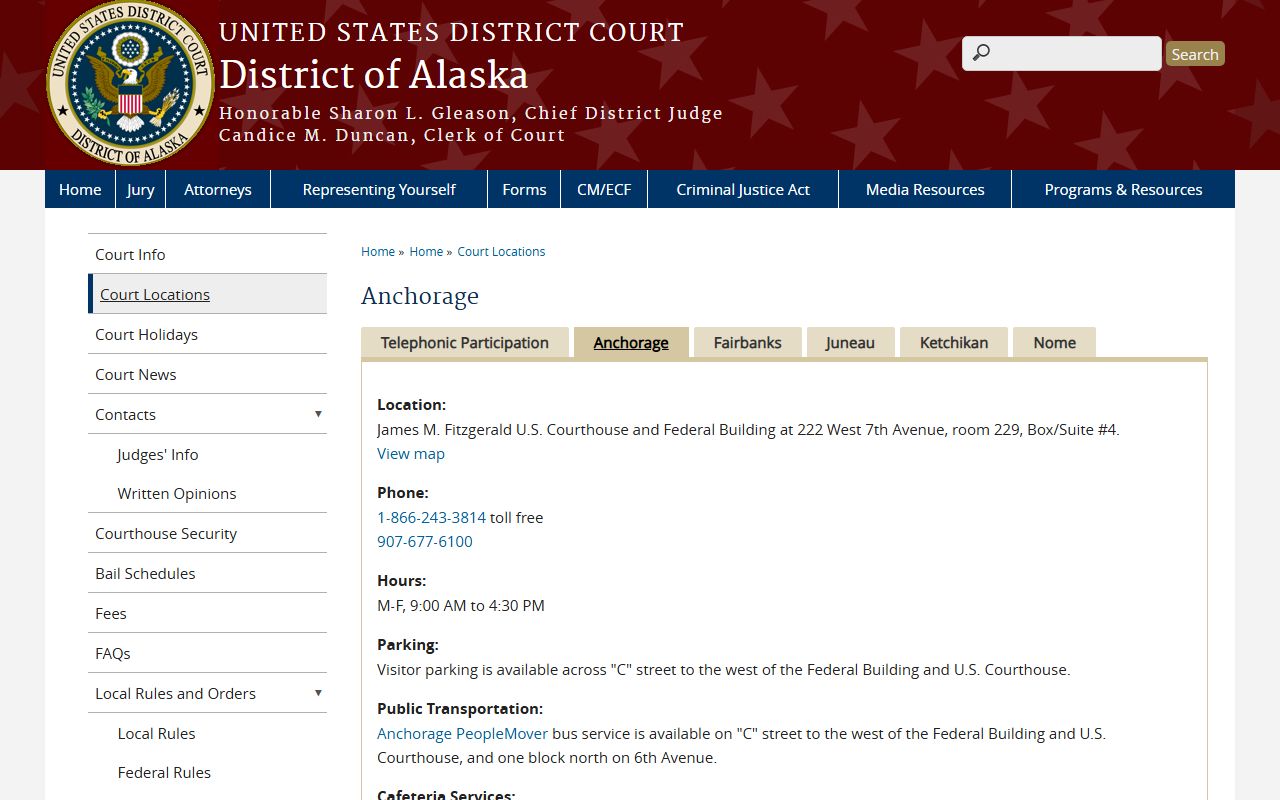
You can open the District of Alaska Anchorage page for courthouse information. The federal courthouse downtown is distinct from the state Nesbett and Boney courthouses covered on the Superior Court page.
One district covers the whole state, which is unusual. Most states have several federal districts, but Alaska has just one, so every federal trial matter in the state runs through it. The Anchorage courthouse carries the name of a federal judge and sits in the downtown federal building area. Hours, entrance rules, and security can change, so the court's own page is the source to check before a visit.
What Anchorage Federal Court Records Show
A federal case file looks a lot like a state one, with its own numbering and vocabulary. The records show who is involved, what is alleged, and how the matter is moving. The main pieces repeat across cases.
- A federal case number assigned by the court.
- Parties, often styled as the United States against a defendant in criminal cases.
- The charges or civil claims at issue.
- A docket of filings, motions, hearings, and orders.
- The disposition and any sentence or judgment.
As with state cases, a filing is not a finding of guilt. The docket and any judgment, not the charge alone, tell you how a case ended. Sealed federal matters and certain juvenile records may not be publicly visible at all.
Federal Bankruptcy Court
Bankruptcy is a federal matter, handled by the U.S. Bankruptcy Court for the District of Alaska. Its site covers the Anchorage court location, hours, fees, court calendars, new cases, opinions, and unclaimed funds. Self-represented filers can find help preparing Chapter 7 or Chapter 13 petitions there.
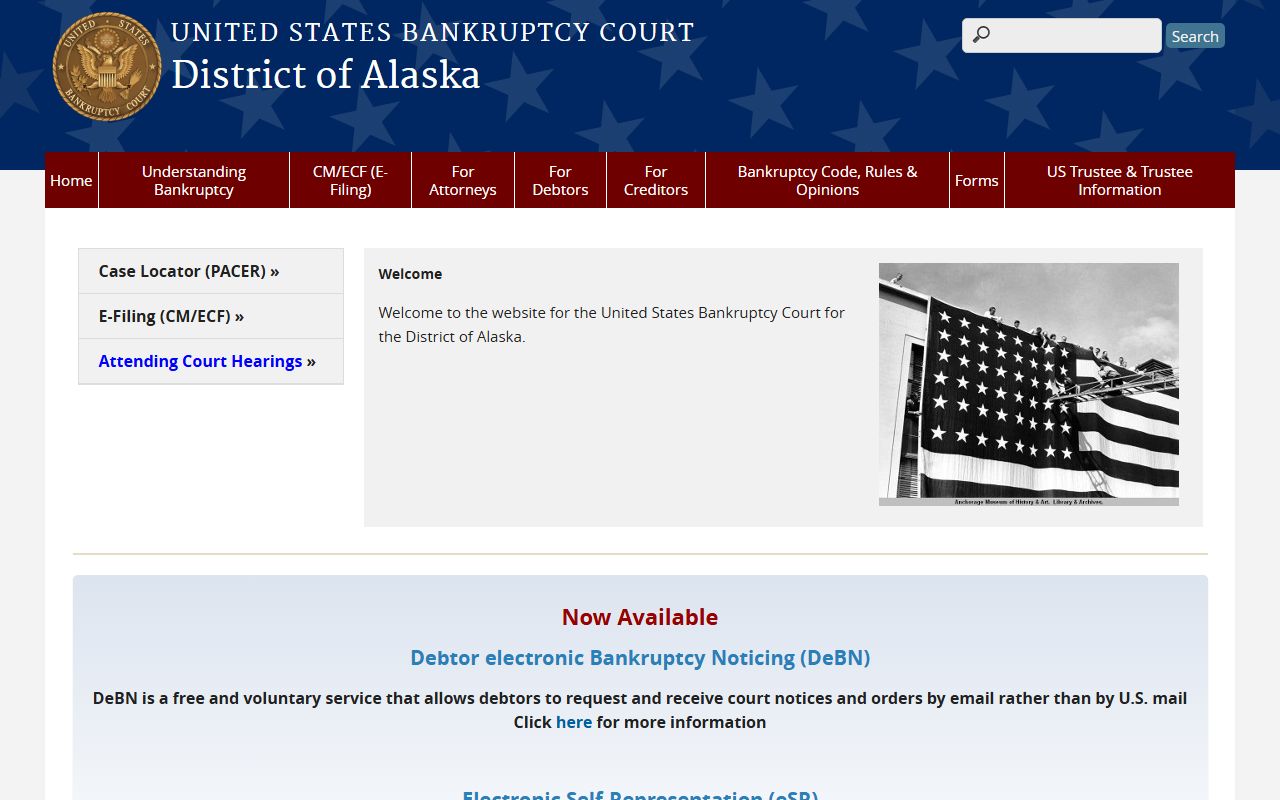
The U.S. Bankruptcy Court for the District of Alaska site is the official source for case information and filing help. Bankruptcy filings are not part of the state CourtView system.
Most personal filings are Chapter 7 or Chapter 13, and the court offers tools aimed at self-represented filers, plus electronic noticing options. The site also posts unclaimed funds, which lets people check whether the court is holding money owed to them. As with other federal records, the docket itself is reached through PACER, while the court's own site explains procedure and deadlines.
PACER and CM/ECF for Federal Records
PACER is the federal record access system, and it comes in two parts. The PACER Case Locator is a national index across district, bankruptcy, and appellate courts. CM/ECF is each court's own filing and docket system. Both list the Alaska District Court and the Alaska Bankruptcy Court as Ninth Circuit courts.
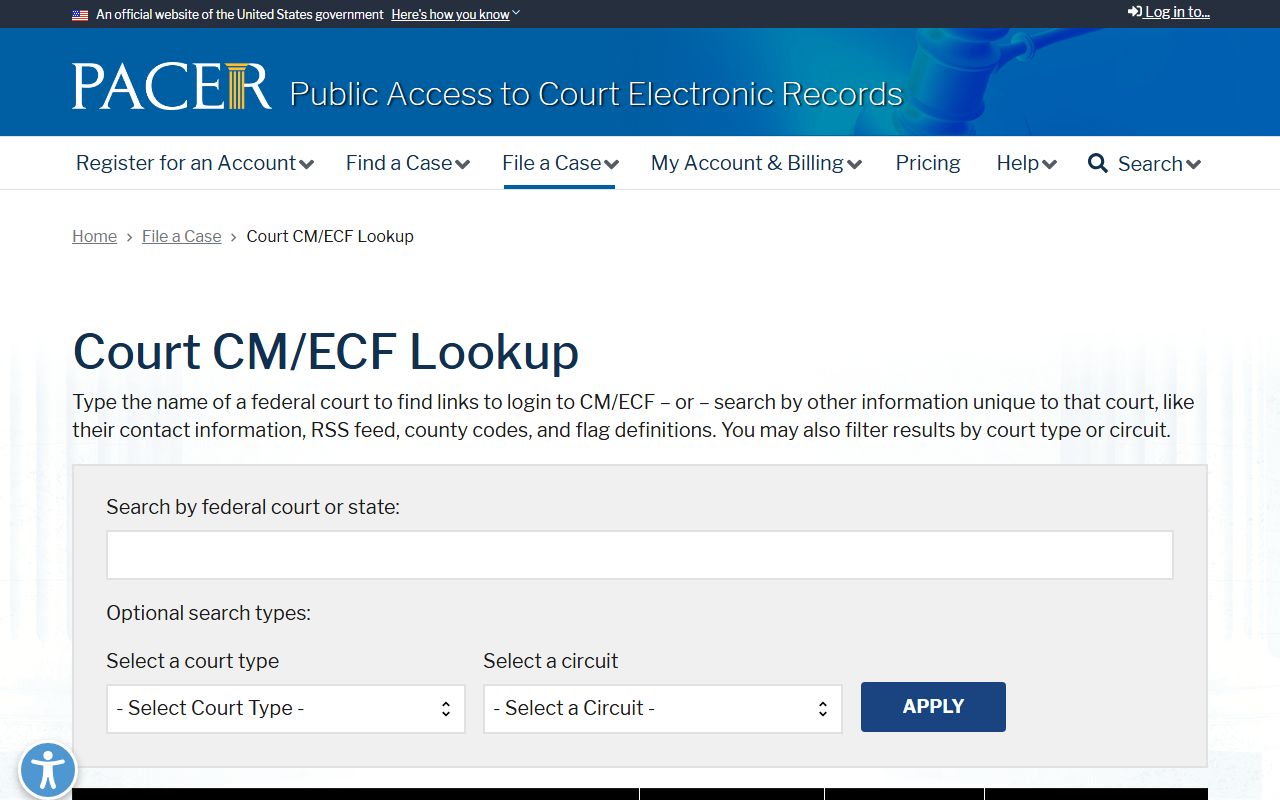
You can use the PACER CM/ECF lookup to find the right court login. A few points help when you use PACER.
- An account is required, and PACER fees may apply to searches and documents.
- The Case Locator is best for a nationwide search across courts.
- CM/ECF is best when you already know the court that holds the case.
- CourtListener is a free option for opinions and some dockets.
The two-part design trips people up. If you only know a name and not the court, start with the Case Locator, which spans every federal court. Once you have the court and case number, the court's CM/ECF gives the full docket. Either way, you log in with one PACER account, and document downloads can carry a per-page fee up to a cap.
The Ninth Circuit Court of Appeals
Appeals from the District of Alaska go to the U.S. Court of Appeals for the Ninth Circuit, except for specialized matters that route elsewhere. The Ninth Circuit covers Alaska and several other western states, so an Anchorage federal appeal is decided within that circuit.
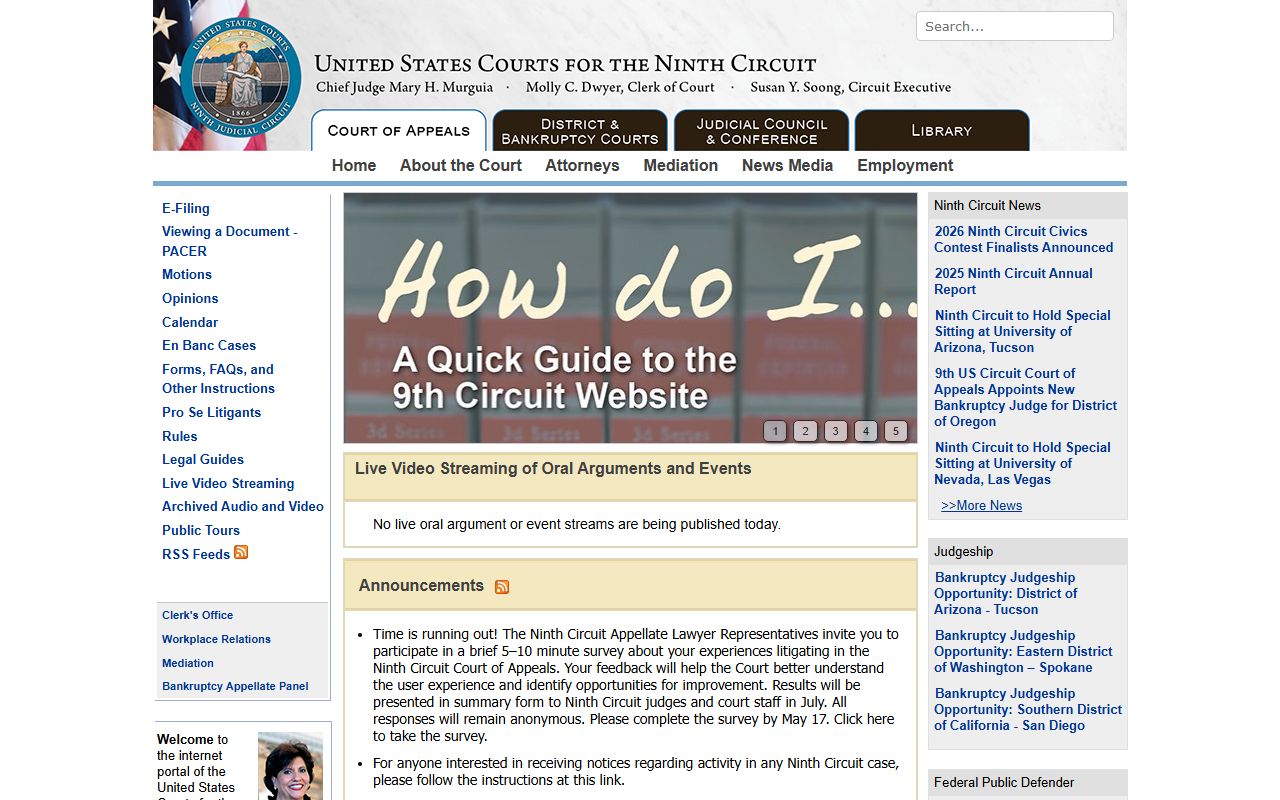
The Ninth Circuit Court of Appeals site posts opinions, rules, and case information. Its dockets are also reachable through PACER, the same as the trial courts. The Ninth Circuit is one of the largest federal appeals courts, so its published opinions can shape how federal law applies in Anchorage even when a case began far away.
Federal Prosecution in Anchorage
Federal crimes are prosecuted by the U.S. Attorney's Office for the District of Alaska, which keeps an Anchorage office along with offices in Fairbanks and Juneau. Federal charges are a separate track from the state District Attorney and the Anchorage Municipal Prosecutor, and federal arrest and case records do not appear in CourtView.
For the state and municipal side of criminal prosecution, the arrest records page covers the District Attorney and the Municipal Prosecutor. For federal custody, the Bureau of Prisons locator is the tool, which the released inmates page covers.
The U.S. Attorney's Office handles federal prosecution across the entire state from its Anchorage, Fairbanks, and Juneau offices. Because the office covers all of Alaska, an Anchorage federal case may involve conduct far from the city. The prosecutor's office is the charging authority, while the court holds the case file and PACER provides the public access to the docket.
Federal Custody and the Bureau of Prisons
Federal custody is separate from state custody. A person convicted in federal court is held by the federal Bureau of Prisons, not the Alaska Department of Corrections, so VINE and a state inmate search will not find them. The Bureau of Prisons runs its own inmate locator that searches federal custody and recent federal releases.
This split matters when you are tracking someone. If a case is federal, the custody answer is on the federal side. The released inmates page covers the Bureau of Prisons locator alongside the state tools, and the inmate records page covers state custody.
Federal vs State Cases in Anchorage
The cleanest way to know where to search is to compare the two systems. Federal and state courts run in parallel, with different records tools. The comparison spells it out.
| Point | Federal Courts | State Courts |
|---|---|---|
| Court | U.S. District Court for Alaska | Alaska Superior and District Court |
| What it hears | Federal crimes, bankruptcy, federal-question civil | State crimes, most civil, family, probate |
| Records system | PACER and CM/ECF | CourtView |
| Appeals | Ninth Circuit Court of Appeals | Court of Appeals and Supreme Court |
So a case missing from CourtView may simply be federal. The court records page covers the state side in full, and switching to PACER is the right next move when a case has a federal flavor.